10 Best Fava Bean Protein Peptides Suppliers?
Choosing reliable Fava Bean Protein Peptides suppliers requires more than comparing prices or reading attractive product claims. Buyers should examine hydrolysis methods, peptide distribution, protein content, solubility, flavor, allergen controls, and batch-to-batch consistency. A pale cream powder may look acceptable, yet its performance can change sharply in water, beverages, or nutrition bars.
Professor David Julian McClements, a recognized food science expert, has emphasized, “The development of plant-based foods with good taste, texture, and nutritional quality remains a major scientific challenge.” This observation matters when evaluating Fava Bean Protein Peptides. A supplier may provide impressive laboratory data, but practical usability still depends on sensory testing and formulation trials. No single specification tells the whole story.
This guide reviews ten notable suppliers through a more careful lens. It considers manufacturing transparency, third-party testing, documentation, technical support, and application experience. Certificates of analysis should confirm identity, peptide content, microbiological safety, and heavy-metal limits. Traceability matters too, especially when raw beans come from several regions. Ask for recent samples.
Some comparisons remain imperfect. Public supplier information can be incomplete, and product grades may change over time. Therefore, this list should support due diligence, not replace it. Responsible buyers should verify current certificates, production sites, minimum order quantities, and regulatory suitability before making commercial decisions. Performance must be tested in the real formula. That is where assumptions often fail.
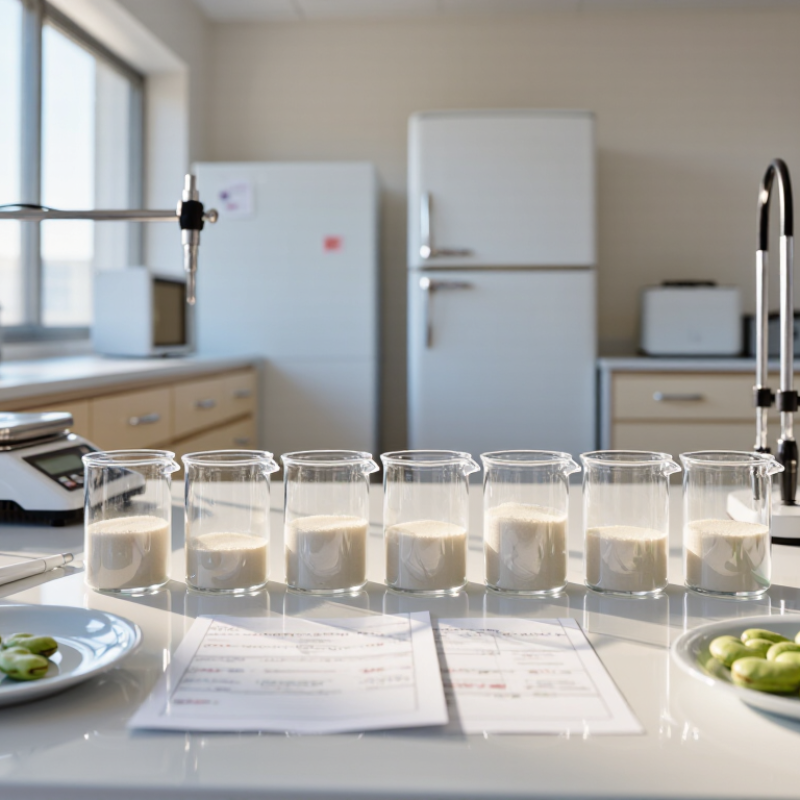
Fava Bean Peptide Basics: Protein Content, Amino Acids, and Bioactivity Data
Fava bean protein content depends on the ingredient form. Whole beans typically contain about 20–30% protein by dry weight, while protein isolates may reach roughly 80–90%. These are broad ranges, not guarantees. Processing, moisture, and testing methods affect the result, so compare supplier specifications on the same basis.
Fava protein provides essential amino acids, including leucine and lysine. Its sulfur-containing amino acids, especially methionine, are relatively limited, so it may complement other plant proteins. Check the amino acid profile per serving, not just total protein. That matters. A high protein number alone does not show how much of each amino acid is present.
Peptides form when proteins are broken into shorter chains, often through enzymatic hydrolysis. Laboratory studies have reported antioxidant activity and effects on enzymes involved in blood-pressure regulation. Those findings are preliminary: test-tube results do not establish benefits in people. Not a promise. For supplier comparisons, review the peptide-size distribution, hydrolysis method, and study conditions. Results can shift with each process, and the available evidence still has gaps.
Supplier Screening: Verify ≥80% Protein, Peptide Size, Purity, and Traceability
10 Best Fava Bean Protein Peptides Suppliers?
A useful supplier screen starts with a clear protein target: at least 80%, with the reporting basis stated. Check whether the result is calculated on a dry basis and request the test method, not just a certificate. Numbers need context. Fava bean peptide products can vary in peptide-size distribution, so ask for the measured range and analytical method. A single average may hide a broad spread.
Tips: Request a recent, lot-specific certificate of analysis. Confirm protein, moisture, microbiological results, and purity specifications. Ask how “purity” is defined; it may refer to protein content or another measure. Match the document’s batch number to the sample and packaging. Keep one sample for your own comparison. Small details matter.
Traceability should connect the crop origin, processing site, production date, and finished lot. Ask whether changes in raw material or processing trigger updated testing. A tidy document is reassuring, but it is not the whole story. This screen has limits: test methods can differ, and results may not compare directly. If a supplier cannot explain a result plainly, pause and ask again.
Top 10 Supplier Profiles: Capacity, Certifications, Applications, and Global Reach
10 Best Fava Bean Protein Peptides Suppliers?
The strongest supplier profiles differ in capacity, documentation, and technical support. Some operate flexible pilot lines, while others handle several hundred tonnes annually. Buyers should request current production figures, not old website estimates. Reliable facilities usually maintain HACCP, ISO 22000, or FSSC 22000 systems. Organic certification may also matter for specific markets. Independent laboratory reports should confirm peptide content, microbiological safety, heavy metals, and allergen controls.
Applications range from sports nutrition powders to ready-to-drink beverages, bakery mixes, and specialized protein formulations. Experienced suppliers can provide solubility data, flavor notes, particle-size information, and sample batches. Their global reach should include export experience, stable packaging, and clear customs documentation. Regional warehouses may shorten delivery times. However, broad distribution does not always mean better technical service. That assumption deserves review. A smaller producer may respond faster and customize hydrolysis more effectively.
Tips: Compare at least three samples under identical mixing conditions. Record sediment, bitterness, color, and dispersion after thirty minutes. Ask whether certifications cover the actual manufacturing site. Verify batch traceability and change-control procedures. Request references from similar applications, when available. Price alone can mislead. A low quotation may exclude testing, freight, or reformulation support. Be careful. Supplier claims still require independent verification.
Final Ranking Matrix: Compare Price, MOQ, Lead Time, Testing, and Customization
A useful ranking matrix for fava bean protein peptide suppliers should compare the same product specification, not just headline prices. Record price per kilogram, minimum order quantity, quoted lead time, testing documents, and customization options. Ask whether the price includes packaging, shipping, and sample fees. A low quote can look different after those costs are added.
For testing, request a current certificate of analysis linked to a batch number. Check protein content, amino acid profile, moisture, microbiological results, and allergen information. Confirm which test methods were used; a result without a method is hard to compare. Lead times should distinguish sample preparation from bulk production and dispatch. Customization may include peptide profile, powder form, packaging, or specification limits. Get each item in writing. Supplier rankings can still be imperfect when quotes use different methods or delivery terms, so note any gaps instead of treating every score as equally reliable.
Tips: Use one spreadsheet and one specification sheet for every supplier. Score documented evidence higher than verbal assurances. Recheck prices and lead times before ordering; both can change.
10 Best Fava Bean Protein Peptides Suppliers — Final Ranking Matrix
Comparative procurement index based on five practical criteria: price competitiveness, minimum order quantity, lead time, testing transparency, and customization capability. Scores are normalized from 0 to 100, with higher values indicating a more favorable purchasing profile. Price, MOQ, and lead-time scores reward lower cost, smaller order requirements, and faster delivery.
