China Best Hip Replacement Surgery Implant Suppliers

Choosing among China’s hip replacement implant suppliers requires more than comparing prices or polished product catalogues. A dependable review looks at manufacturing controls, material traceability, product documentation, and the evidence supporting each implant design. These details matter. A supplier’s sales language alone cannot establish clinical performance.

For hospitals and procurement teams, useful questions include how components are made, how batches are identified, and what technical support is available. Ask for clear specifications, quality-system documentation, and relevant clinical data. Check that information independently where possible. Requirements can vary by destination market, so supplier claims should be assessed against applicable local standards rather than assumed to apply everywhere.

The best choice is not automatically the largest company or the lowest bid. Implant selection belongs within a qualified clinical team’s assessment of a patient’s needs, anatomy, and health. A supplier can provide products and technical information; it cannot replace a surgeon’s judgment. In hip replacement surgery, small design differences may affect fit, surgical technique, and follow-up planning. Yet evidence may not answer every practical question, and comparisons are not always straightforward. That deserves attention.

This guide introduces factors for evaluating China-based suppliers without treating any company as universally superior. It considers product range, quality assurance, documentation, service, and transparency. Readers should verify current information directly with manufacturers and healthcare professionals. A careful comparison takes time. It is still worth doing.
China Best Hip Replacement Surgery Implant Suppliers

Overview of Hip Replacement Implants and Their Main Components

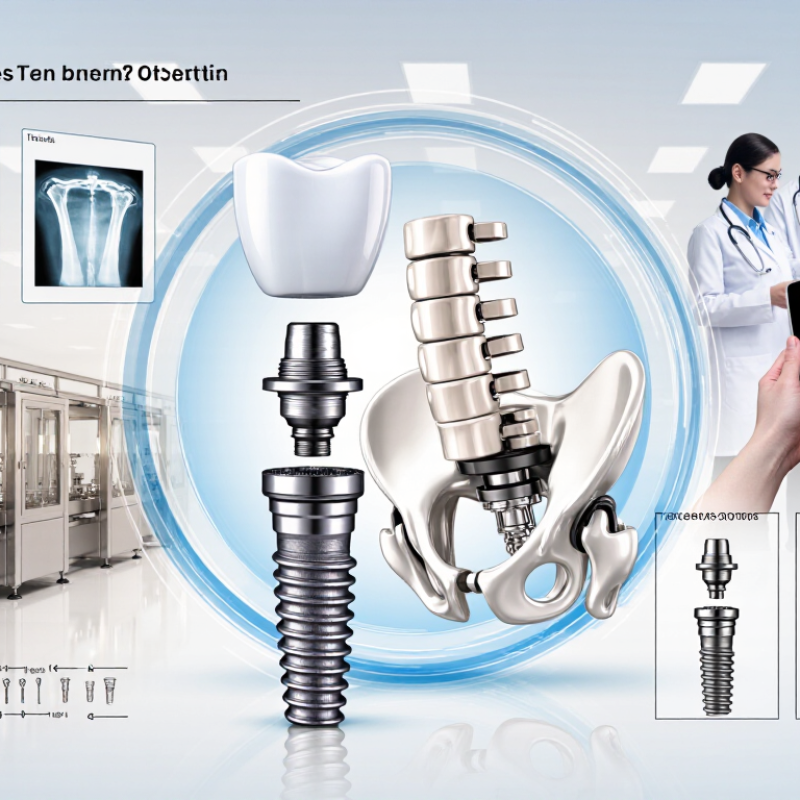
A total hip replacement implant has two main sides: a femoral component and an acetabular component. The femoral stem sits inside the thigh bone, while its rounded head moves within a cup in the pelvis. A liner fits inside that cup and provides the bearing surface. Together, these parts recreate a stable, moving joint. Small differences in shape and size matter.

Implants may use combinations of metal, ceramic, and medical-grade polymer. The best option depends on bone quality, anatomy, activity level, and the surgeon’s assessment. A well-positioned implant should allow smooth movement and stable support, but no design guarantees a specific outcome. Fit is not just a catalogue measurement; real anatomy can be less tidy than diagrams suggest. That detail deserves careful discussion.

Tips: Ask which components are planned and why they suit your imaging and bone condition. Confirm how the stem and cup will be sized and positioned. Request clear explanations of material choices, expected follow-up, and possible trade-offs. Bring questions to your care team, and allow time to understand the answers.

Types of Hip Implants Offered by Chinese Suppliers

Chinese suppliers may offer several hip implant configurations, but the right choice depends on anatomy, bone quality, activity, and the surgeon’s assessment. A typical system includes a femoral stem, a ball-shaped head, and an acetabular cup with a liner. Stems may be cemented, uncemented, or used in hybrid combinations. Uncemented designs rely on bone growth around a textured surface; cemented designs use bone cement for fixation.

Bearing surfaces vary. Common combinations include ceramic on polyethylene, ceramic on ceramic, and metal on polyethylene. Components may use titanium alloys, cobalt-chromium alloys, ceramics, or medical-grade polyethylene. These materials have different wear and strength characteristics, but no single option suits everyone. Product sheets can look reassuringly precise; real recovery is less predictable.

Tips: Ask for the implant’s material specifications, size range, fixation method, and quality documentation. Confirm that the proposed components fit your clinical needs with your orthopedic surgeon. Small details matter. A supplier’s catalog cannot replace a medical evaluation, and terminology may differ between manufacturers. Verify each component’s intended use and compatibility before making decisions.

China Best Hip Replacement Surgery Implant Suppliers - Types of Hip Implants Offered by Chinese Suppliers

Implant Type or Configuration Typical Components and Materials General Characteristics Common Considerations
Total hip replacement: cementless fixation Acetabular shell and femoral stem commonly made from titanium alloy; bearing options may include a ceramic or cobalt-chromium head with a highly cross-linked polyethylene liner. Components are designed for initial mechanical stability and bone ingrowth onto porous or otherwise bone-contacting surfaces. Bone quality, component fit, implant design, and the patient's clinical circumstances affect suitability. Bone ingrowth takes time.
Total hip replacement: cemented fixation A femoral stem is fixed using bone cement, commonly polymethylmethacrylate (PMMA). The acetabular component may be cemented or use a separate fixation method, depending on the system. Cement provides fixation between the implant and prepared bone; cemented stems are used in selected patient groups and clinical situations. Fixation choice depends on factors such as bone quality, age, anatomy, and the surgeon's assessment. Cement technique is an important part of the procedure.
Total hip replacement: hybrid fixation Typically combines a cemented femoral stem with a cementless acetabular shell, or uses the reverse arrangement in some designs. Combines different fixation methods for the femoral and acetabular components. The specific combination should be assessed for the patient's anatomy and bone condition; configurations vary by implant system.
Metal-on-polyethylene bearing Usually a cobalt-chromium femoral head articulating against a highly cross-linked polyethylene liner; the head may also be ceramic in some configurations. A widely used bearing option with a polyethylene liner between the femoral head and acetabular shell. Wear depends on material, component positioning, activity, and other factors. The bearing combination should be confirmed for the specific system.
Ceramic-on-polyethylene bearing Ceramic femoral head articulating against a highly cross-linked polyethylene liner. Pairs a ceramic head with a polyethylene bearing surface. Material choice and component compatibility matter. Ceramic components require careful handling because ceramics can fracture, although fracture is uncommon.
Ceramic-on-ceramic bearing Ceramic femoral head and ceramic acetabular bearing surface, usually housed in an acetabular shell. Uses ceramic surfaces at the articulation; offered in selected total hip replacement systems. System-specific compatibility and surgical positioning are important. Ceramic bearings may produce audible noise in some patients and can rarely fracture.
Dual-mobility total hip system A small femoral head moves within a mobile polyethylene insert, which in turn articulates with a metal acetabular shell. Provides two articulating surfaces and is designed to increase the effective range of motion before impingement. May be considered in selected cases where instability risk is a concern. Suitability and potential complications require clinical evaluation.
Modular femoral components May include a separate stem and femoral head, with compatible materials and dimensions specified by the implant system. Allows the surgeon to select compatible component sizes and, in some systems, neck options during surgery. Components must be used only in combinations approved by the system manufacturer; compatibility should not be assumed across systems.
Partial hip replacement (hemiarthroplasty) Femoral stem and head replace the hip's femoral side; the patient's natural acetabular surface remains in place. Replaces the femoral head and neck rather than both sides of the joint; commonly considered for certain femoral neck fractures. It is not a total hip replacement. The choice between partial and total replacement depends on the diagnosis and patient-specific factors.

Note: These are general implant categories and commonly used material combinations, not a ranking of suppliers or a product availability list. Actual options, materials, sizes, regulatory status, and compatibility vary by system and market. Implant selection should be made by a qualified orthopedic surgeon based on the patient's clinical needs.

How Chinese Hip Implant Suppliers Manufacture and Test Their Products

China Best Hip Replacement Surgery Implant Suppliers

Chinese hip implant suppliers typically begin with verified material batches and controlled production records. Teams machine the femoral stem and cup, then inspect dimensions with calibrated gauges. Surfaces may be polished or treated to support the intended implant design. Each production step should leave a traceable record. Small details matter, including burr removal and consistent surface finish. A missed edge can affect performance.

Testing often includes dimensional checks, material analysis, corrosion assessment, and mechanical fatigue testing. Some designs also undergo wear simulation, where components move repeatedly under controlled loads. Packaging and sterilization processes need validation as well. Results should be linked to defined acceptance criteria, not just presented as isolated figures. No test fully reproduces a patient’s life, though. That limitation deserves honest attention.

Tips: Ask suppliers how they control batch variation and handle failed tests. Request clear test methods and recent documentation, then review them with qualified clinical and engineering professionals. Look for explanations, not only impressive numbers. A neat report is useful, but it cannot replace careful assessment of the product, its intended use, and the patient’s needs.

Quality Standards and Regulatory Requirements for Hip Implant Suppliers

Selecting a hip implant supplier in China starts with documented controls, not polished product photos. For implants classified as Class III in China, confirm the applicable NMPA registration and approved product scope. Check that the legal manufacturer, manufacturing site, and model numbers match across certificates, labels, and technical files. Small mismatches matter.

A reliable quality system should align with ISO 13485, while risk management should follow applicable ISO 14971 requirements. Ask for evidence, not assurances: material certificates for titanium or cobalt-chromium, machining inspection results, surface-finish limits, and lot-level traceability. For sterile products, review validated sterilization and packaging processes, including seal integrity and shelf-life data. Biocompatibility evidence should match the materials and patient contact. No generic file is enough.

Requirements vary by market. Suppliers exporting to Europe or the United States must meet the destination’s current authorization, quality, labeling, and post-market obligations; Chinese registration alone does not establish this. Audit records and corrective-action logs can show whether procedures work on the factory floor. Look closely. Ask how rejected components are separated and how design changes reach distributors. Answers may be imperfect, but clear records matter. A certificate may be neat; a machining log can still contain gaps.

Key Factors for Evaluating and Selecting a Chinese Supplier

When evaluating a Chinese hip replacement implant supplier, look beyond the catalogue and quoted price. Request clear specifications for each component, including alloy or polymer type, dimensions, surface finish, and compatible instruments. Ask how production batches are identified and traced. A label should connect the implant to inspection records, not just a shipment number. Small details matter.

Review the supplier’s quality procedures, inspection methods, and applicable approvals for your intended market. Confirm how sterilization is validated and how packaging protects components during storage and transport. Request current technical files and evidence supporting claimed performance. A polished brochure is only a starting point. If documents are vague or answers change between meetings, pause and verify rather than assuming the gap is harmless.

Assess communication and support, too. Can the supplier explain complaint handling, product changes, and delivery delays in writing? Ask for realistic lead times and check whether sample records match the production process. A low quote can hide costs in instruments, training, or inconsistent supply. I would not judge a supplier from one factory visit; that can create false confidence. Compare evidence across documents, discussions, and independent clinical or technical review. Some uncertainty will remain, so record what still needs clarification.

Scroll to Top